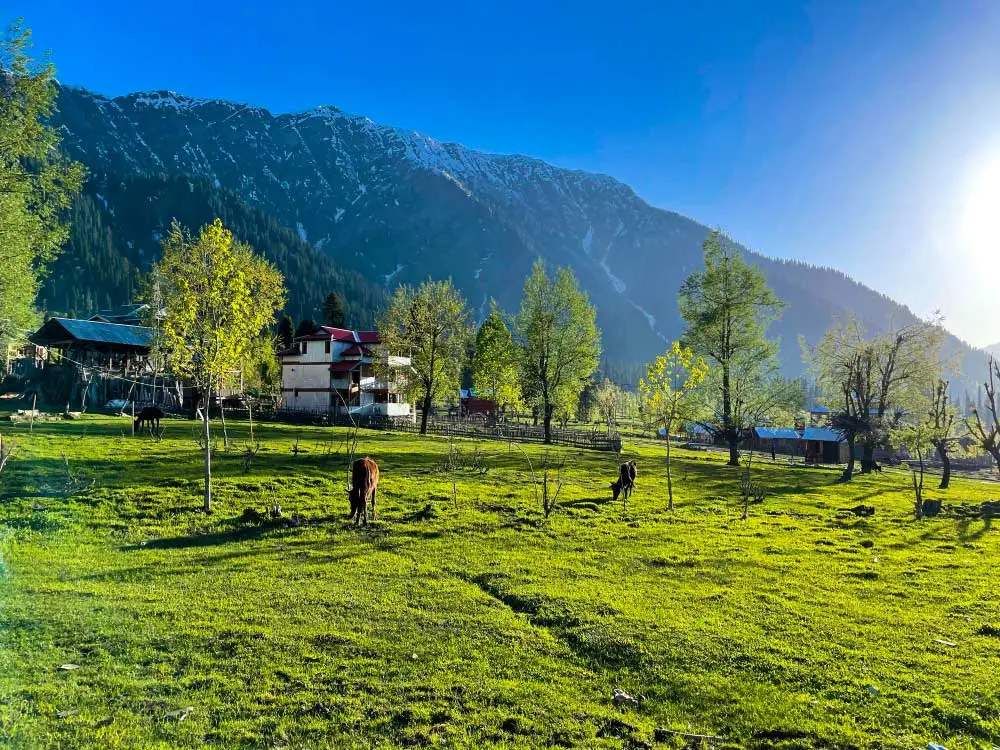
There is a version of Himachal Pradesh that exists outside the tourist circuit — outside the Shimla Mall Road and the Manali snow-sport queues and the Rohtang permit scramble. It is a quieter place. A place where a Tibetan monk beats a drum at 5:30 AM in a courtyard you found by walking a lane you were not supposed to take, where the Tirthan river makes a sound so continuous and complete that after two days you stop hearing it as sound and start hearing it as silence, where the evening light on Kinner Kailash peak turns the mountain into something that no photograph has ever quite captured. This Himachal — the one made of deodar forest paths and riverside mornings and village guesthouses where breakfast takes an hour because the family who cooked it wants to know where you are from — is still here. You just need to know where to go, and a driver who has spent his life in these hills to take you there.
Why Himachal Pradesh for Meditation, Yoga & Spiritual Travel
Himachal Pradesh sits in the western Himalaya at altitudes between 450 m and 6,800 m, and its landscape is not merely scenic — it is physiologically different. The air at 1,800–2,500 m carries measurably higher oxygen purity than Indian plains cities. The electromagnetic noise that urban environments generate is absent in the valleys. The quality of light — especially at dawn and dusk in the mountain valleys — has a clarity and depth that is both visually extraordinary and psychologically calming. These are not travel-brochure metaphors. They are reasons why Buddhist monasteries have existed in these mountains for over a thousand years, why yoga and contemplative traditions have found their deepest roots in Himalayan settlements, and why an increasing number of international travelers now come to Himachal not for adventure tourism but for inner-directed experiences that cities and packaged retreats cannot provide.
Himachal also offers something that dedicated retreat centres in Bali, Thailand or Rishikesh frequently do not: genuine solitude in genuine nature. Tirthan Valley's Great Himalayan National Park buffer zone means that the forest surrounding your guesthouse is legally protected and functionally wild. The silence at Chitkul — India's last civilian village on the Hindustan-Tibet Road — is not the curated silence of a retreat centre but the real silence of a village at 3,450 m where the nearest town is three hours away. These destinations offer mindfulness retreats in India that no instructor or programme can manufacture. The Himalaya provides the curriculum.
The Offbeat Himachal Destinations Worth Slowing Down For
Bir — Tibetan Buddhist Silence in the Kangra Valley
Bir is a Tibetan refugee settlement in the Kangra valley that has grown, over six decades, into one of the most quietly remarkable communities in India. The main colony consists of a cluster of monasteries, a stupa, a Tibetan school and a main street of Tibetan restaurants and handicraft shops — all set against the Dhauladhar range and surrounded by flat green fields that the Tibetan community has farmed since their arrival in the 1960s. Sherab Ling Monastery, the seat of Kalu Rinpoche, is one of the most architecturally extraordinary Buddhist buildings in Himachal Pradesh: a four-storey gompa with elaborate painted interiors, a 20-metre golden Buddha, and a rooftop view of the entire Bir valley that rewards the 80-step climb in every season.
For spiritual travel India, Bir offers something rare: a functioning Buddhist community rather than a heritage site. Morning prayers at 5:30 AM (to which respectful visitors are welcome) are genuine monastic practice, not tourist theatre. The Deer Park Institute, a short walk from the monastery, hosts international seminars on Buddhist philosophy, meditation and contemplative science — and its schedule of events frequently includes drop-in meditation sessions open to visitors. Many travelers spend 3–4 days in Bir doing nothing more structured than morning monastery visits, long afternoon walks through the paddy fields, and evenings in one of the Tibetan cafés that have been serving butter tea to passing Westerners for thirty years.
Andretta — The Artist's Village in the Paddy Fields
Andretta is a small village 16 km from Palampur that most Himachal tourists have never heard of, despite containing one of the most interesting artistic and cultural heritages in the Kangra valley. The painter Norah Richards — an Irish artist who arrived in Punjab in 1905 with her playwright husband — chose Andretta as her home and created a community of artists, dramatists and writers around her cottage that persisted for decades. The Sobha Singh Art Gallery here houses a significant collection of paintings by Sobha Singh, whose portraits of Guru Nanak and Heer Ranjha have become among the most widely reproduced images in Punjabi culture. The village also has an active pottery studio (Andretta Pottery) where traditional Himachali ceramics are made in methods largely unchanged since the 1970s.
For contemplative travelers, Andretta offers something different from the monastery villages — a landscape of paddy terraces, mango groves, and river flats that has a deeply unhurried quality. There are no souvenir stalls, no paragliding operators and no weekend crowds. A morning walk through the village lanes to the pottery studio and a slow afternoon at the Norah Richards cottage garden — now a heritage property — is a day spent in a way that most Himachal visitors never experience.
Barot Valley — A Trout River and No Mobile Signal
Barot Valley is what happens when a valley is too far off the main road for tourism to find it and too beautiful for the people who do find it to stop coming back. The Uhl river runs through a forested valley at 1,800 m, stocked with brown trout since the British built a hydroelectric project here in the 1920s — the old dam, the workers' colony bungalows and the trout hatchery still function, giving the valley an oddly timeless quality that is part nostalgia and part genuine remoteness. The forest on both sides of the river is dense oak and cedar, largely undisturbed, and the sound of the river in the narrow sections of the valley completely eliminates any other acoustic landscape.
Mobile connectivity in Barot is unreliable at best and absent in most guesthouses — which is, for the visitors who seek it out, precisely the point. A digital detox retreat in India does not require a scheduled programme when the environment itself enforces the disconnection. Three days in Barot — walking the riverside paths, watching the trout in the clear water, journaling in the evening after a day with no screen time — accomplishes what expensive wellness retreats try to simulate with phone confiscation policies and meditation bells. The valley does it naturally.
Tirthan Valley — The River That Teaches You to Slow Down
Tirthan Valley sits in the buffer zone of the Great Himalayan National Park — a UNESCO World Heritage Site — in the Kullu district. The Tirthan river runs cold and very clear through a valley of mixed forest, and the guesthouses that line its banks are among the most thoughtfully run in Himachal Pradesh: wooden structures built over the water, with decks that hang above the river and bedrooms where the sound of moving water is so continuous that guests consistently report the deepest sleep they have had in years. The forest above the valley begins at the guesthouse gardens and continues unbroken into the national park — birdsong at dawn in Tirthan includes Himalayan species that are simply not present in more accessible areas.
For mindfulness retreats India, Tirthan requires nothing more structured than arriving with time. River-side yoga on a guesthouse deck with the Himalayan peaks visible in early morning clarity, afternoon walks on the forest paths above the village of Gushaini, evening conversations with the local Gushaini community about the village's relationship with the national park — these are the experiences that Tirthan provides without a programme, a facilitator or a registration fee. Our drivers know all the guesthouses on the Tirthan river and can book ahead in your preferred style (rustic riverside, family-run or more private).
Jibhi — A Waterfall Village for Sunrise and Stillness
Jibhi is a small village in the Banjar valley that has acquired a quiet following among travelers who discovered it by accident — looking for somewhere to stay on the way to somewhere else, and finding that they did not want to leave. A waterfall drops through a cedar forest 10 minutes above the main lane. The Jalori Pass road (at 3,120 m) climbs from Jibhi through oak and rhododendron forest to a pass with views of the Seraj valley on one side and the Sutlej watershed on the other. The village itself is a cluster of old Himachali wooden houses with carved windowframes, a tiny market and enough guesthouses for perhaps 100 visitors — which is, on most days, several times the actual number present.
Sunrise at Jibhi in April — when the rhododendrons are in flower on the Jalori approach and the air temperature is around 8°C at 6 AM — is one of those specific experiences that travels well in memory. Forest yoga at that hour, with the waterfall audible from the practice space and the peaks above Jalori visible through the trees, is not something a purpose-built yoga retreat can replicate. Our drivers plan Jibhi as part of a 2–3 village slow-travel circuit, typically combined with Tirthan Valley and Barot.
Chitkul & Kalpa — Kinnaur's Edge of the World
Chitkul is the last inhabited village before the Indian border in Kinnaur district, at 3,450 m on the old trade road to Tibet. It sits at the end of the Baspa Valley, beyond which the mountains close into a high-altitude desert that no civilian may enter. The village has perhaps 500 permanent residents, a cluster of old stone and timber houses with carved wooden balconies, a small Buddhist temple painted in primary colours against the rock face, and a quality of silence so complete and so multi-directional that first-time visitors consistently describe a sense of physical pressure from it. This is alternative travel Himachal in its most elemental form: a place that exists at the edge of habitable India, where the only direction is inward.
Kalpa, 30 km below Chitkul at 2,960 m, provides the complementary experience — a Kinnauri apple village with a direct eastern view of the Kinner Kailash massif, an 11-peak ridge considered one of Shiva's abodes in Hindu cosmology. Dawn at Kalpa begins when the first peak catches light at around 5:40 AM, and the illumination moves slowly across the ridge from east to west over the following 30 minutes. The old Kalpa town — narrow lanes, wooden temples, elderly Kinnauri women in traditional dress with enormous ceremonial headdresses — is a living heritage that the broader tourism circuit has not yet reached.
Experiences for Mindful Travelers
Sunrise Meditation
At Bir, Kalpa and Chitkul — first light on the Himalayas is the most effective meditation bell in existence.
Forest Walks
Tirthan Valley and Jibhi forest paths through oak and deodar — walking meditation in complete natural quiet.
River-Side Mindfulness
The Tirthan and Uhl rivers provide a natural sound environment for mindfulness sessions that no studio can reproduce.
Village Immersion
Andretta pottery, Chitkul temple walks, Bir Tibetan colony — living cultural exchange rather than spectator tourism.
Temple Visits
Sherab Ling Monastery morning prayers (Bir), ancient Kalpa Narayan temple, Baijnath Shiva temple — sacred spaces of genuine depth.
Journaling & Digital Detox
Barot Valley's absent mobile signal and Jibhi's cedar forest guesthouses create the conditions that journaling retreats charge for.
Yoga with Mountain Views
Tirthan river decks, Jibhi forest clearings, Kalpa apple orchards — every setting provides a yoga backdrop that is its own instruction.
Slow Mornings
Butter tea in a Tibetan café in Bir, fresh chai from a Kinnauri family's kitchen in Kalpa — unhurried mornings are the practice.
7-Day Meditation & Slow Travel Itinerary: Hidden Himachal
This itinerary is a framework — not a schedule. Every element is adjustable based on your pace, your interests and what the mornings ask of you. Your driver will have local contacts at each destination and can arrange introductions that no booking platform can provide.
| Day | Location | Experiences |
|---|---|---|
| Day 1 | Delhi → Bir (480 km, overnight cab) |
Depart Delhi 8–9 PM in private cab. Sleep through the NH-44 plains. Arrive Bir by 7–8 AM. Morning walk through the Tibetan colony after check-in. Rest and acclimatise. |
| Day 2 | Bir | 5:30 AM morning prayers at Sherab Ling Monastery. Breakfast at Tibetan café. Afternoon at Deer Park Institute (check current schedule for meditation or talk). Evening walk through paddy fields as light falls on the Dhauladhar. |
| Day 3 | Bir → Andretta → Barot Valley (3 hrs by cab) |
Morning: 1-hour stop at Andretta pottery and Sobha Singh Gallery. Continue to Barot Valley. Afternoon arrival, riverside guesthouse. Evening forest walk above the Uhl dam. Phone off for the first time. |
| Day 4 | Barot Valley | Full day without agenda. Morning yoga on the river bank. Walk the trout hatchery trail through deodar forest. Afternoon journaling. No mobile signal. Dinner cooked by guesthouse family — ask about the village. |
| Day 5 | Barot → Jibhi → Tirthan Valley (3 hrs by cab) |
Depart Barot 9 AM. 1-hour stop in Jibhi for the waterfall walk and a slow coffee. Continue to Tirthan Valley. Arrive by 1 PM. Afternoon on the guesthouse river deck — forest above, river below, mountains ahead. |
| Day 6 | Tirthan Valley | 6 AM: river-side yoga as the valley fills with bird calls. 9 AM: forest walk toward the GHNP boundary — no permit needed for the buffer zone trails. Afternoon: mindfulness session by the river. Evening conversation with the Gushaini village community. |
| Day 7 | Tirthan → Kullu → Delhi or extension to Kalpa | Return cab to Delhi (480 km, 11–12 hrs) — or extend 2 nights at Kalpa for the Kinner Kailash sunrise experience before returning via Shimla. Extension cab: Tirthan to Kalpa 220 km, 5–6 hrs via Rampur. |
This itinerary can be run in either direction. Chitkul can replace or extend Kalpa for travelers wanting the India-border village experience. All cab logistics, inter-village transfers and guesthouse introductions handled by YourTripDriver. Call +91 96254 51988 to customise.
Ready to Plan Your Meditation Journey?
Tell us your dates, your intentions and how long you have — we will design the route, arrange the transport and make sure the right doors are open when you arrive.
Plan My Journey WhatsApp UsWhy a Private Local Driver Transforms This Kind of Travel
Slow travel in offbeat Himachal is not about reaching destinations — it is about what happens between them. The kind of travel this guide describes works best when the journey itself is part of the practice, not merely the means of getting somewhere. A private cab with an experienced local driver changes what is possible in specific ways that matter to contemplative travelers.
Our drivers know these valleys not as tourists do — from guidebooks and TripAdvisor reviews — but as residents who have driven these roads for years and know the families who run the guesthouses, the monks who open the monasteries before 6 AM, the forest trails that are not on any map and the specific hours of light that make each destination what it is. When you want to stop because the forest light is doing something extraordinary, the cab stops. When you want to stay an extra day in Barot because you had not finished listening, the schedule adjusts. When you arrive at Sherab Ling Monastery and the driver knows to wait, to not honk and to explain quietly to the monk at the gate who you are and why you are there — that is not a service. That is a relationship with the place.
Why Travel With YourTripDriver
Deep Local Knowledge
Our drivers have years on these specific roads — Barot, Kinnaur, Tirthan. They know the guesthouses by name, the monastery schedules and the routes that guidebooks have not found.
Safe Mountain Driving
The Kinnaur road and Jalori Pass approach require experienced mountain drivers. Our vehicles are maintained for these conditions. Safety is not an add-on — it is the foundation of everything we do.
Fully Flexible Itineraries
No fixed group schedule. Stay an extra day where you feel it. Skip a destination that does not call to you. The itinerary follows you, not the other way around.
Authentic Experiences
We do not create experiences — we create access. The monastery, the river, the village family, the forest path at 6 AM are authentic because they were there before tourism and will be there after it.
Solo, Couple or Family
Whether you are traveling alone for a self-directed retreat, with a partner for a slow journey together, or with family including elderly members — our service adjusts to your group's specific needs and pace.
24/7 Support
WhatsApp and phone support throughout your journey. If a road is blocked, a guesthouse changes availability or you decide to stay three more days in Jibhi — we sort it, at any hour.
Your Private Cab. Your Pace. Your Himalaya.
Door-to-door from Delhi, Chandigarh or Dharamshala to any destination in this guide. WhatsApp or call — we respond within 2 hours.
Book Your Trip +91 96254 51988Frequently Asked Questions — Meditation & Offbeat Himachal Travel
Q: What are the best offbeat places in Himachal Pradesh for meditation and spiritual travel?
A: Bir (Tibetan Buddhist monasteries and the Deer Park Institute), Andretta (quiet artists' village near Palampur), Barot Valley (pristine river valley with no mobile signal), Tirthan Valley (UNESCO national park buffer zone with river-side guesthouses), Jibhi (cedar forest waterfall village in the Banjar valley), and Kalpa and Chitkul in Kinnaur (where the silence of the high Himalaya is a physical presence). Our local drivers provide private cab service to all of these from Delhi, Chandigarh and Dharamshala.
Q: Are there genuine meditation retreats in Himachal Pradesh?
A: Yes — from structured Tibetan Buddhist programmes at Bir's Sherab Ling Monastery and Deer Park Institute to personal digital detox stays in Barot, Tirthan and Jibhi where the setting provides the retreat. Many travelers create their own 7–14 day meditation journey across multiple villages, using private transport to move between them on their own schedule. YourTripDriver plans and drives these personalised journeys.
Q: What is the best time to visit Himachal Pradesh for yoga or meditation?
A: March–June (clear skies, moderate temperatures, rhododendron forests) and September–November (post-monsoon clarity, golden light, apple harvest in Kinnaur, finest photography) are the best seasons. December–February is ideal for those seeking snow silence — Kalpa and Chitkul in winter are profoundly quiet, with road access requiring an experienced winter driver.
Q: How do I travel to offbeat places in Himachal Pradesh from Delhi?
A: By private cab with a mountain-experienced local driver. Bir is 480–500 km from Delhi (10–12 hrs). Tirthan Valley is 480–510 km (11–13 hrs). Chitkul is 580–620 km (14–16 hrs). A private cab lets you travel on your schedule, stop freely and arrive without the fatigue of public transport. YourTripDriver provides door-to-door overnight service from Delhi to all Himachal destinations. Call +91 96254 51988.
Q: What is Bir Billing and why is it good for spiritual travel?
A: Bir is a Tibetan settlement in the Kangra valley with working Buddhist monasteries including Sherab Ling (seat of Kalu Rinpoche) and the Deer Park Institute — a Buddhist studies centre with international programmes. Morning monastery prayers (5:30 AM, open to respectful visitors), walking meditation paths through the Tibetan colony, and evening views of the Dhauladhar make Bir one of Himachal's finest destinations for contemplative travel. Private cab from Dharamshala is 35 km (1 hour).
Q: What is the Great Himalayan National Park and can I visit Tirthan Valley?
A: The Great Himalayan National Park is a UNESCO World Heritage Site in the Kullu district. Tirthan Valley is the main gateway and buffer zone — guesthouses on the river are available without a park permit. Most visitors spend 3–5 days simply being in the valley — river yoga, forest walks, birdwatching and genuine quiet. YourTripDriver provides cab service from Delhi, Kullu or Manali to Tirthan guesthouses.
Q: Is Chitkul safe to visit and how do I get there?
A: Chitkul is safe and accessible June–October. Indian nationals require an Inner Line Permit (available in Reckong Peo). The Sutlej gorge road near Wangtu requires an experienced mountain driver — a private cab from Shimla or Delhi with a Kinnaur-route driver is the recommended approach. YourTripDriver drivers know this route thoroughly. Call +91 96254 51988 for Chitkul cab service.
Q: Can YourTripDriver create a custom meditation itinerary across multiple Himachal villages?
A: Yes — this is one of our specialities. A typical 7–10 day slow travel journey combines 2–3 of the destinations in this guide, with the same trusted driver throughout, flexible day-by-day scheduling and local introductions that transform the experience. WhatsApp +91 96254 51988 with your dates and the kind of journey you are seeking — we will design the route around you.
The Himalaya has been a place of inward journeys for as long as humans have been drawn to mountains. The peaks do not move for tourists — but they have a way, if you slow down enough and arrive in the right valley at the right hour, of meeting you exactly where you are. The river at Tirthan does not care about your plans. The light at Kalpa at 5:40 AM has never once been scheduled. Bir's monks have been praying since before Tibetan exile and will continue long after the last guidebook forgets to mention the monastery. These places are not waiting to be discovered — they are simply waiting. Come slowly. Stay long enough to hear what they are saying. We will take you there in good company, on good roads, at the pace the mountains deserve.
Call or WhatsApp: +91 96254 51988 • yourtripdriver.com